


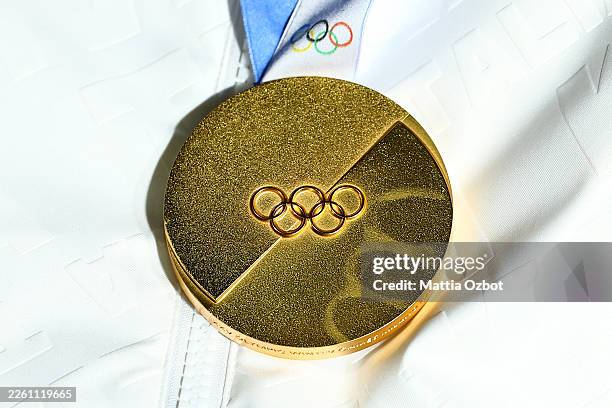
It’s 2026, and the Winter Olympic Games took place in Milan and Cortina, Italy. Short-Track Speed Skating was an important part of the games, with a separate schedule for both men and women, featuring a relay for each.
Short-track speed skating is a competitive form of speed skating in which 4-6 competitors compete on the skating rink. “It’s called Short-Track Speed Skating because the rink is about 111.12 meters (364 feet) long, while the Long Track rink is about 400 meters (1,312 feet).” Instead of it being a time trial in head-to-head pairs, it’s a group of 4 to six racing without a set time limit.
In the 1988 Winter Olympics in Calgary, Short-Track Speed Skating was first introduced as a demonstration sport. “In 1992, Short-Track Speed Skating became a part of the Olympic program.” Since then, the 2002 Olympics in Salt Lake City added to the event, bringing Short-Track Speed Skating to eight individual games. Finally, the Beijing Olympics in 2022 added the mixed and unmixed relays.
The women’s 1000m and short-track speed skating events took place on February 10th and were completed on February 22nd. The winner of both the 1000m and 500m short-track speed skating was Xandra Velzeboer, a skater from Culemborg, Netherlands, winning two gold medals for the Netherlands.

The men’s 1500m, 1000m, and 500m short-track speed skating events also took place between February 10th and February 22nd. The winner of the men’s 1500m and 1000m was skater Jens van ‘t Wout, a skater from Laren, Netherlands, making him another gold medalist for the Netherlands. For the men’s 500m, the winner was Steven Dubois, a skater from Quebec, Canada.